
India's electric vehicle (EV) markets expanded gains in January compared to the year-ago period, as two-wheeler and passenger vehicle sales triggered a shuffle in the competitive landscape, data from an automobile dealers' association showed.
The Delhi government is set to equip its industrial training institutes (ITIs) with advanced labs to train young people in power electronics, electric vehicles, and the automotive sector, aiming to create a skilled workforce ready for industry demands.
India's Ministry of Power has notified the third phase of Corporate Average Fuel Economy (CAFE-III) norms for passenger vehicles, effective from April 1, 2027, which set relatively softer efficiency targets for lighter cars and demand greater improvements from heavier vehicles, a move expected to benefit manufacturers like Maruti Suzuki India.

Matter Motor's CEO discusses the increasing role of data and intelligent systems in the automotive industry, highlighting the shift towards software-defined mobility and AI-defined vehicles.

NIT Rourkela has secured a patent for a solar-powered electric vehicle (EV) charging microgrid designed to enhance efficiency, reliability, and sustainability. The technology integrates solar panels, the conventional grid, and a unique energy storage system combining batteries and supercapacitors, managed by an improved mixed droop technique. This innovation addresses challenges like power surges, renewable energy fluctuations, and battery degradation, with plans for future scaling and industry integration.

India's automobile retail sales saw a 23.8 per cent year-on-year decline in October to 31.72 lakh units, primarily due to the shift of major festivals like Dhanteras and Diwali to November this year, according to the Federation of Automobile Dealers Associations (FADA). Despite the overall dip, electric vehicle sales reached an all-time high, and commercial vehicles, three-wheelers, and tractors recorded their best-ever October sales.

Mercedes-Benz India has launched the Electric GLC 400 4MATIC, marking the first vehicle built on the MB.EA-M electric platform and locally assembled at its Chakan facility in Pune. The luxury EV, priced at 78.50 lakh, has already garnered significant interest with over 650 bookings and features advanced technology, impressive performance, and a long range.

Tata Motors Passenger Vehicles Ltd (TMPV) announced a price hike of up to Rs 25,000 across its ICE and electric vehicle models, effective September 1, to mitigate rising input costs and inflationary pressures.
Electric passenger vehicle registrations in India surged by nearly 75 per cent year-on-year in October, significantly cushioning the 14.6 per cent contraction in the overall passenger vehicle market. This growth was particularly beneficial for manufacturers like Tata Motors and Mahindra, whose EV sales helped offset sharper declines in conventional internal combustion engine (ICE) vehicle registrations.

September marked India's highest-ever monthly EV retail volume. More than one in nine two-wheelers retailed in September was electric.
The Indian government has made electric vehicles (EVs) the default choice for staff car procurement across ministries and departments, setting a higher price cap of 20 lakh for EVs compared to 10 lakh for ICE vehicles. Concurrently, new guidelines have been issued for procuring electronic devices, incentivising 'Make in India' products with a higher price ceiling.

Suzuki Motor Corporation is set to revolutionise its operations by halving vehicle development times and significantly boosting efficiency by 2030, while committing to a diverse multi-powertrain strategy that includes BEVs, hybrids, and carbon-neutral fuels.

India has prohibited the export of lithium-ion battery black mass to bolster domestic recycling capabilities and enhance the recovery of critical minerals like lithium, cobalt, nickel, and manganese. This move aims to ensure feedstock availability for local recyclers, reduce import dependence, and strengthen supply chains for electric vehicles and clean energy technologies, aligning with the Aatmanirbhar Bharat vision.

Mercedes-Benz CEO Ola Kllenius believes India is poised to become a significant manufacturing and export hub for the luxury carmaker, citing the country's growing market, supplier ecosystem, and engineering capabilities. The company also anticipates electric vehicles (EVs) will constitute a substantial 20% of its India sales by 2027.
PCBL Chemical Ltd's subsidiary, Nanovace Technologies Ltd, has formed a new wholly-owned subsidiary, Nanovace Advanced Materials Ltd, to focus on advanced battery materials and next-generation energy storage technologies for various sectors including electric vehicles and consumer electronics.

The Indian government's proposal to extend the operating life of certain battery-electric, CNG, and hydrogen vehicles under national permits by five years could significantly improve their total cost of ownership (TCO) and residual values, according to industry experts.

Tata Motors Passenger Vehicles Ltd (TMPV) has launched its new brand identity, TATA.CARS, aiming to appeal to a younger demographic with a focus on smarter, greener, and more connected mobility experiences.

JSW MG Motor India has unveiled ADAPT, India's first multi-powertrain new energy vehicle (NEV) platform, designed to support electric, hybrid, plug-in hybrid, and range-extender electric vehicles. The company plans to launch one electric SUV and one plug-in hybrid SUV based on this architecture during FY27, aiming to broaden its NEV portfolio and accelerate adoption in India.
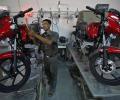
India's leading two-wheeler manufacturers, including TVS Motor, Bajaj Auto, and Hero MotoCorp, are preparing for a deceleration in growth during the second half of financial year 2026-27 (H2FY27). This anticipated slowdown is attributed to a high base effect from last year's GST rate cut, inconsistent rural demand, and a growing disparity between premium and entry-level segments.

JSW Group and China's SAIC Motor are in discussions for the next round of capital support for JSW MG Motor India, aiming to expand manufacturing capacity beyond 220,000 units annually to an ambitious one million vehicles and broaden its new-energy vehicle (NEV) portfolio.

Electric passenger vehicle retail sales in India surged by 81.2 per cent to 26,682 units in May, with Tata Motors leading the segment, while electric two-wheeler sales also saw a substantial 62.76 per cent increase, according to the Federation of Automobile Dealers Associations (FADA).

The Delhi government has announced a series of stringent measures to combat air pollution in the national capital ahead of winter. These include prohibiting construction activities, restricting entry of non-BS-VI vehicles, doubling parking charges, implementing staggered office timings, and strengthening public transport, alongside public awareness campaigns and infrastructure improvements.

Tata Motors is maintaining its lead over Mahindra & Mahindra in the race for the second position in India's passenger vehicle market, largely driven by its strong performance in electric vehicle sales. Both companies are aggressively expanding their SUV and EV portfolios and scaling up production to meet surging demand, indicating a fierce competition ahead.

Shriram Finance, a leading Indian NBFC, is aggressively expanding its gold loan and electric vehicle (EV) financing segments, targeting a Rs 20,000 crore gold loan portfolio within two years and expecting significant growth in EV disbursements.
Spreading risks in sourcing raw materials for electric vehicle (EV) manufacturing is "very critical" and the government can play a key role by enabling access to these from multiple locations worldwide, said Vivek Srivatsa, chief commercial officer at Tata Passenger Electric Mobility, on Friday while stressing the need for faster localisation, especially of batteries.

Mercedes-Benz India's Managing Director & CEO Santosh Iyer stated that demand continues to outstrip supply, particularly for the CLA electric vehicle, with over 1,000 orders and deliveries extending to March-April 2027. The company could have sold an additional 1,000 vehicles if supply had been adequate.

India remains one of the Hyundai Motor group's most important and strategic markets globally. The initiative positions India as a strategic core market for the group's growth, emerging market expansion, and next-generation automotive innovation.
In the e2W category, which accounts for more than 60 per cent of total EV sales, volumes fell 15 per cent to 118,944 units in November, compared to 139,787 units in the previous month

Mercedes-Benz India plans to continue introducing hybrid vehicles, including the new AMG E 53 plug-in hybrid EV, to meet consumer demand, viewing hybrids as a crucial bridge to full electrification despite the absence of supportive government policies.
Electric vehicle (EV) sales in India are growing faster than the industry's ability to produce and deliver them, leading to supply shortages at dealerships during the peak festival season. This surge in demand is attributed to rising conventional fuel prices, making EVs a more attractive option for cost-conscious buyers.
The Indian government has approved a Rs 2,814 crore capital expenditure support scheme to promote domestic processing of critical minerals like lithium and nickel. This five-year scheme, running until 2030-31, aims to reduce import dependence, develop value chains, and enhance India's self-reliance in essential materials for clean energy and modern technologies. It includes a 30% capital subsidy for setting up processing plants.

Researchers at NIT Rourkela have patented a novel hybrid energy-storage system designed to significantly improve the efficiency and lifespan of electric vehicle batteries. This innovation addresses common issues like low power density and thermal stress by integrating supercapacitors with a simplified architecture, making EVs more reliable, especially in urban driving conditions.
Electric vehicle sales registered a 55.2 per cent on-year growth at 1,79,038 units in July driven by a massive 96 per cent jump in e-two-wheeler sales, automobile dealers' body FADA said on Tuesday. The total electric vehicles sales for July 2023 were at 1,16,221 units, according to the monthly sales data from Federation of Automobile Dealers' Association (FADA).
Bajaj Auto received the highest incentive payout under the government's Production-Linked Incentive (PLI) scheme for automobiles and auto components in FY26, securing approximately 625.65 crore. Despite exceeding investment targets, the scheme has significantly underperformed in job creation and incremental sales, generating only 46% of projected jobs and 23% of targeted sales by March 2026.

Hyundai Motor India Ltd (HMIL) is set to launch a localised mass-market SUV built on a dedicated EV platform, expanding its EV portfolio beyond the IONIQ 5 and CRETA Electric, while also significantly boosting its charging infrastructure and training its workforce.

Automobile dealers in India are reporting healthy bookings ahead of Navratri and Dussehra, with the Federation of Automobile Dealers Associations (Fada) indicating strong confidence in a pickup in deliveries from mid-October, despite a high base from last year's GST-led surge.

India's auto sector has reported robust vehicle deliveries during Dhanteras, with major automakers like Maruti Suzuki, Tata Motors, and Hyundai India experiencing significant growth across two-wheeler, passenger vehicle, and commercial vehicle segments. This strong momentum is expected to continue through Diwali, driven by positive market sentiment and high demand, even in the pre-owned car market.
Bajaj Auto plans to increase its annual production capacity by nearly 25 per cent, from around 7 million to over 9 million vehicles, in the coming quarters. This expansion is driven by strong export demand and rapid growth in electric vehicles, which have stretched current capacity across key product segments.

The proposal caught auto makers by surprise.

Electric vehicle retail sales in India reached a new monthly record of 3,27,901 units in July, marking a 66 per cent increase over the previous year, with nearly one in eight vehicles retailed now being electric.
